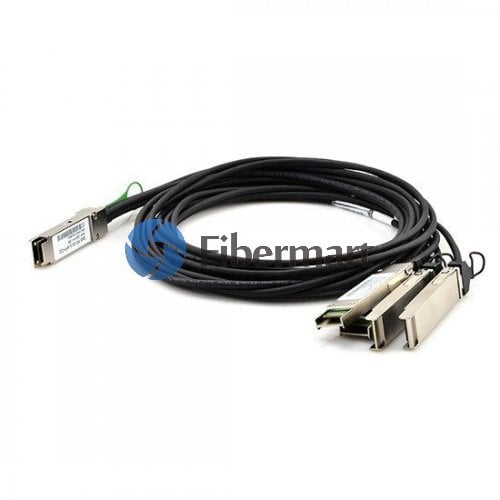

In today’s high-speed data center and networking environments, selecting the right connectivity solutions is crucial for performance, reliability, and scalability. One of the essential components for efficient data transfer is the QSFP28 harness cable. Designed for 100G Ethernet applications, these cables play a vital role in high-bandwidth data transmission, offering flexibility and performance that standard cabling cannot achieve. Understanding the key features and considerations when comparing QSFP28 harness cables is essential for businesses looking to optimize their network infrastructure.
Understanding QSFP28 Harness Cables
A QSFP28 harness cable is a high-performance interconnect solution that integrates multiple optical or copper channels into a single compact cable assembly. QSFP28, which stands for Quad Small Form-factor Pluggable 28, supports data rates up to 100Gbps per module. These cables are typically used to connect switches, servers, and storage devices within data centers, providing reliable high-speed communication while minimizing space and complexity.
Unlike standard breakout cables, QSFP28 harness cables are designed for dense network environments, offering high signal integrity, reduced crosstalk, and simplified installation. Fiber-mart provides a wide range of QSFP28 harness cables, ensuring compatibility with various transceivers and networking equipment.
Key Features to Consider
When comparing QSFP28 harness cables, several critical features influence performance and suitability for specific applications.
Cable Type and Transmission Medium
QSFP28 harness cables are available in both copper and optical variations. Copper versions, often referred to as DAC (Direct Attach Copper) cables, are cost-effective and ideal for short-distance connections up to 7 meters. Optical harness cables, on the other hand, utilize fiber optics for longer distances, providing better signal integrity and reduced latency.
Choosing the right medium depends on your network layout. For example, short-distance connections between racks may favor copper QSFP28 harness cables, while optical versions are preferable for inter-building connections or data center backbones.
Data Rate and Bandwidth
The primary purpose of QSFP28 harness cables is to handle high-speed data transfer. A standard QSFP28 harness cable supports 100Gbps, but it is essential to check the supported breakout configurations, such as 4x25Gbps channels, to ensure they meet your network requirements. Fiber-mart offers QSFP28 harness cables with various configurations, allowing flexibility for different networking scenarios.
Cable Length and Flexibility
Length is a crucial consideration when deploying QSFP28 harness cables. While copper DAC cables are limited to a few meters due to signal attenuation, optical cables can extend much further without performance degradation. It is also important to consider the flexibility and bend radius of the cable, especially in dense data center environments, to prevent damage and maintain signal quality. Fiber-mart’s QSFP28 harness cables are designed with flexible jackets and robust construction to withstand tight bends and rigorous handling.
Connector Compatibility
QSFP28 harness cables feature standardized connectors, but it is essential to verify compatibility with your existing equipment. Most QSFP28 cables use MTP/MPO connectors for optical connections and QSFP28 plugs for copper variants. Fiber-mart provides a wide selection of QSFP28 harness cables that ensure seamless compatibility with leading switches, servers, and transceivers, reducing the risk of connectivity issues.
Signal Integrity and EMI Protection
High-speed data transmission is susceptible to signal degradation and electromagnetic interference (EMI). Quality QSFP28 harness cables include shielding and optimized cable design to minimize crosstalk and maintain high signal integrity. Copper cables, in particular, require careful attention to shielding, while optical cables are naturally immune to EMI. Fiber-mart QSFP28 harness cables are engineered to provide low insertion loss and high return loss, ensuring reliable performance even in demanding environments.
Power Consumption
Another consideration is the power consumption of the cable assembly. Although QSFP28 modules themselves are designed to be energy-efficient, the cable type can influence overall system power usage. Copper DAC cables are passive and consume minimal power, while active copper cables or optical cables with transceivers may require additional energy. Choosing the appropriate cable type helps optimize overall data center energy efficiency.
Considerations for Choosing the Right QSFP28 Harness Cable
Selecting the appropriate QSFP28 harness cable involves more than comparing technical specifications. Several practical considerations can influence the decision:
- Network Architecture: Assess your network layout to determine the cable type, length, and breakout configuration required. High-density racks may benefit from shorter, flexible DAC cables, while longer optical cables suit distributed environments.
- Scalability: Consider future network growth. Selecting cables with higher bandwidth capability or flexible breakout options allows easy upgrades without replacing the entire cabling infrastructure.
- Cost vs. Performance: While optical QSFP28 harness cables offer superior distance and signal quality, copper DAC cables are more cost-effective for short connections. Balance budget constraints with performance requirements.
- Installation and Maintenance: Ease of installation and management is vital in data centers. Pre-terminated QSFP28 harness cables simplify deployment, reduce installation errors, and support quick maintenance or replacement.
- Vendor Reliability: Choosing a trusted supplier ensures quality, warranty support, and compatibility. Fiber-mart is a reputable source of QSFP28 harness cables, offering a range of options tested for performance and reliability.
Applications of QSFP28 Harness Cables
QSFP28 harness cables are widely used in various networking scenarios. Common applications include:
- Data Center Interconnects: Connecting top-of-rack switches to aggregation or core switches with high-speed links.
- High-Performance Computing (HPC): Supporting high-bandwidth communication between servers in clusters or supercomputing environments.
- Storage Area Networks (SANs): Enabling fast data transfer between storage devices and servers, critical for enterprise storage solutions.
- Telecommunications Networks: Providing reliable 100Gbps connections in carrier-grade network infrastructures.
Why Choose Fiber-mart QSFP28 Harness Cables
Fiber-mart stands out as a trusted provider of QSFP28 harness cables, offering a comprehensive selection to meet diverse network requirements. Their cables are designed to ensure maximum performance, reliability, and compatibility. Customers benefit from:
- High-quality construction with robust shielding and durable materials
- Support for both copper and optical configurations
- Variety of lengths and breakout options for flexible deployment
- Verified compatibility with major network equipment
- Reliable technical support and guidance for cable selection
By choosing Fiber-mart QSFP28 harness cables, network administrators can ensure optimal performance, reduce downtime, and simplify maintenance in complex networking environments.
Conclusion
Comparing QSFP28 harness cables involves evaluating multiple factors, from cable type and data rate to compatibility, signal integrity, and scalability. Understanding these features helps in making informed decisions that align with specific network needs. Whether deploying high-speed connections in data centers, HPC clusters, or enterprise networks, selecting the right QSFP28 harness cable ensures reliable performance and future-proof infrastructure.