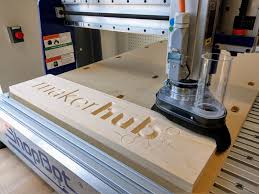

CNC routers have revolutionized the world of manufacturing, woodworking, and fabrication by providing unparalleled precision, speed, and flexibility. These machines are computer-controlled cutting devices capable of carving, drilling, and shaping materials with a level of accuracy that is difficult to achieve manually. From small-scale hobbyists to large industrial operations, CNC routers have become essential tools across multiple industries. Understanding the different types of CNC routers and their applications is crucial for businesses and individuals looking to maximize efficiency and creativity in their work.
Understanding CNC Routers
A CNC router is a machine that uses computer numerical control to guide cutting tools along various axes. Unlike traditional routers, which require manual operation, CNC routers follow pre-programmed designs, ensuring consistent results. The versatility of CNC routers allows them to work with a wide range of materials, including wood, plastics, metals, composites, and even foams. Their precision makes them ideal for tasks that demand high accuracy, intricate detailing, and repeatable production.
Types of CNC Routers
CNC routers can be categorized based on their size, design, and intended application. Each type offers specific advantages and is suited for particular tasks.
Desktop CNC Routers
Desktop CNC routers are compact machines designed for small-scale projects and hobbyists. They are typically lightweight, easy to set up, and ideal for working with wood, acrylic, and soft metals. These routers are perfect for DIY enthusiasts, model makers, and small businesses that require precise cuts on a smaller scale. Despite their size, many desktop CNC routers provide impressive accuracy and can produce intricate designs that would be difficult to achieve manually.
Gantry CNC Routers
Gantry CNC routers, also known as bridge-style routers, feature a fixed gantry that moves along the X and Y axes while the cutting tool moves along the Z-axis. This design is highly stable, making it suitable for large workpieces and heavy-duty applications. Gantry CNC routers are commonly used in woodworking, cabinetry, and signage production. Their ability to handle larger materials with consistent precision makes them a favorite in industrial settings where high-volume output is required.
3-Axis CNC Routers
3-axis CNC routers are the most common type of router, operating along the X, Y, and Z axes. These routers are versatile and can handle a wide range of materials and designs. The three-axis movement allows for cutting, drilling, and engraving on flat or slightly contoured surfaces. 3-axis CNC routers are widely used in woodworking, plastic fabrication, and aluminum machining. They provide a balance between cost and functionality, making them ideal for many small to medium-sized businesses.
4-Axis CNC Routers
4-axis CNC routers add a rotational axis, allowing the material to rotate while the cutting tool performs its operations. This additional axis enables the machine to work on cylindrical or complex curved surfaces, expanding the range of possible projects. Applications for 4-axis CNC routers include creating decorative columns, custom furniture, and intricate signage. The added flexibility of the fourth axis increases efficiency by reducing the need to reposition materials manually.
5-Axis CNC Routers
5-axis CNC routers offer movement along three linear axes (X, Y, and Z) and two rotational axes, enabling the cutting tool to approach the material from multiple angles. This capability allows for the creation of highly complex and precise 3D shapes, making 5-axis routers indispensable in industries such as aerospace, automotive, and mold-making. Although more expensive than other types, 5-axis CNC routers provide unmatched versatility and accuracy, especially for intricate designs that require simultaneous multi-directional cutting.
Vertical CNC Routers
Vertical CNC routers have a spindle oriented vertically, making them ideal for detailed engraving, cutting, and shaping on flat materials. These routers excel in tasks such as cabinet making, panel cutting, and sign production. Their vertical design allows for efficient chip removal and excellent surface finish quality, making them a popular choice in woodworking and custom fabrication shops.
Horizontal CNC Routers
Horizontal CNC routers feature a horizontally oriented spindle, allowing for efficient cutting of thicker materials and large workpieces. These machines are often used in industrial applications, including furniture production, boat building, and composite material machining. Horizontal CNC routers are known for their robustness and ability to maintain precision over long cutting runs, making them suitable for high-volume manufacturing environments.
Applications of CNC Routers
CNC routers are incredibly versatile, and their applications span a wide range of industries. Understanding the strengths of each type helps businesses and craftsmen select the most suitable machine for their needs.
Woodworking
In woodworking, CNC routers are used for cutting, shaping, and engraving wood with precision. They are ideal for creating furniture, cabinets, decorative panels, and intricate patterns. The ability to produce consistent cuts reduces waste and increases productivity, making CNC routers indispensable in modern woodworking shops.
Signage and Advertising
CNC routers play a crucial role in the signage industry. They can cut letters, logos, and designs into wood, acrylic, foam, and aluminum with precision. 3-axis and 4-axis routers are commonly used to produce both flat and three-dimensional signage, enabling businesses to create custom and eye-catching displays efficiently.
Aerospace and Automotive
In aerospace and automotive industries, CNC routers are used to fabricate complex parts and components with tight tolerances. 5-axis CNC routers, in particular, are essential for creating intricate molds, prototypes, and functional parts. Their ability to handle advanced materials such as composites and metals makes them invaluable for precision engineering.
Art and Sculpture
Artists and sculptors use CNC routers to transform their digital designs into physical objects. From intricate wood carvings to detailed metal sculptures, CNC routers allow artists to achieve levels of precision and consistency that would be difficult manually. 4-axis and 5-axis routers enable the creation of complex three-dimensional art pieces with ease.
Prototyping and Manufacturing
CNC routers are widely used in prototyping and small-scale manufacturing. They allow designers and engineers to test designs quickly, make modifications, and produce functional prototypes. The high repeatability and accuracy of CNC routers reduce errors and speed up the production process, providing a significant advantage in product development.
Choosing the Right CNC Router
Selecting the right CNC router depends on factors such as material type, project complexity, production volume, and budget. Small businesses and hobbyists may find desktop or 3-axis routers sufficient, while large-scale manufacturers may require gantry, 4-axis, or 5-axis machines to meet their production demands. Understanding the capabilities and limitations of each type ensures optimal results and efficient use of resources.
Conclusion
CNC routers have transformed the landscape of modern fabrication, offering precision, versatility, and efficiency across numerous industries. From hobbyist desktop models to industrial 5-axis machines, each type of CNC router serves a specific purpose and opens up new possibilities for design and production. By understanding the different types of CNC routers and their applications, businesses and craftsmen can make informed decisions that enhance productivity, reduce waste, and bring creative visions to life. Whether in woodworking, aerospace, signage, or art, the CNC router remains a cornerstone of modern manufacturing technology, driving innovation and excellence in every project it touches.